Keyholder Procedures
Cryptographic keyholders (maintainers) sign governance decisions. Procedures below apply to keyholders.
Maintainer Responsibilities
Maintainers are responsible for:
- Reviewing Changes: Understanding the impact of proposed changes
- Signing Decisions: Cryptographically signing approved changes
- Maintaining Keys: Securely storing and managing cryptographic keys
- Following Procedures: Adhering to governance processes and review periods
Signing Process
- Review PR: Understand the change and its impact
- Generate Signature: Use
blvm-signfrom blvm-sdk - Post Signature: Comment
/governance-sign <signature>on PR - Governance App Verifies: Cryptographically verifies signature
- Status Check Updates: Shows signature count progress
Key Management
Key Generation
blvm-keygen --output maintainer.key --format pem
Key Storage
- Development: Test keys can be stored locally
- Production: Keys should be stored in HSMs (Hardware Security Modules)
- Backup: Secure backup procedures required
Key Rotation
Keys can be rotated through the governance process. See maintainer guide for detailed procedures.
Emergency Keyholders
Emergency keyholders can activate emergency response classes defined in emergency-tiers.yml (see PR Process → Emergency Procedures):
- Activation (all classes): 5-of-7 emergency keyholders
- Critical class: 4-of-7 maintainer signatures after activation; maximum 7 days
- Urgent class: 5-of-7 signatures; maximum 30 days
- Elevated class: 6-of-7 signatures; maximum 90 days
Release Pipeline Gate Strength
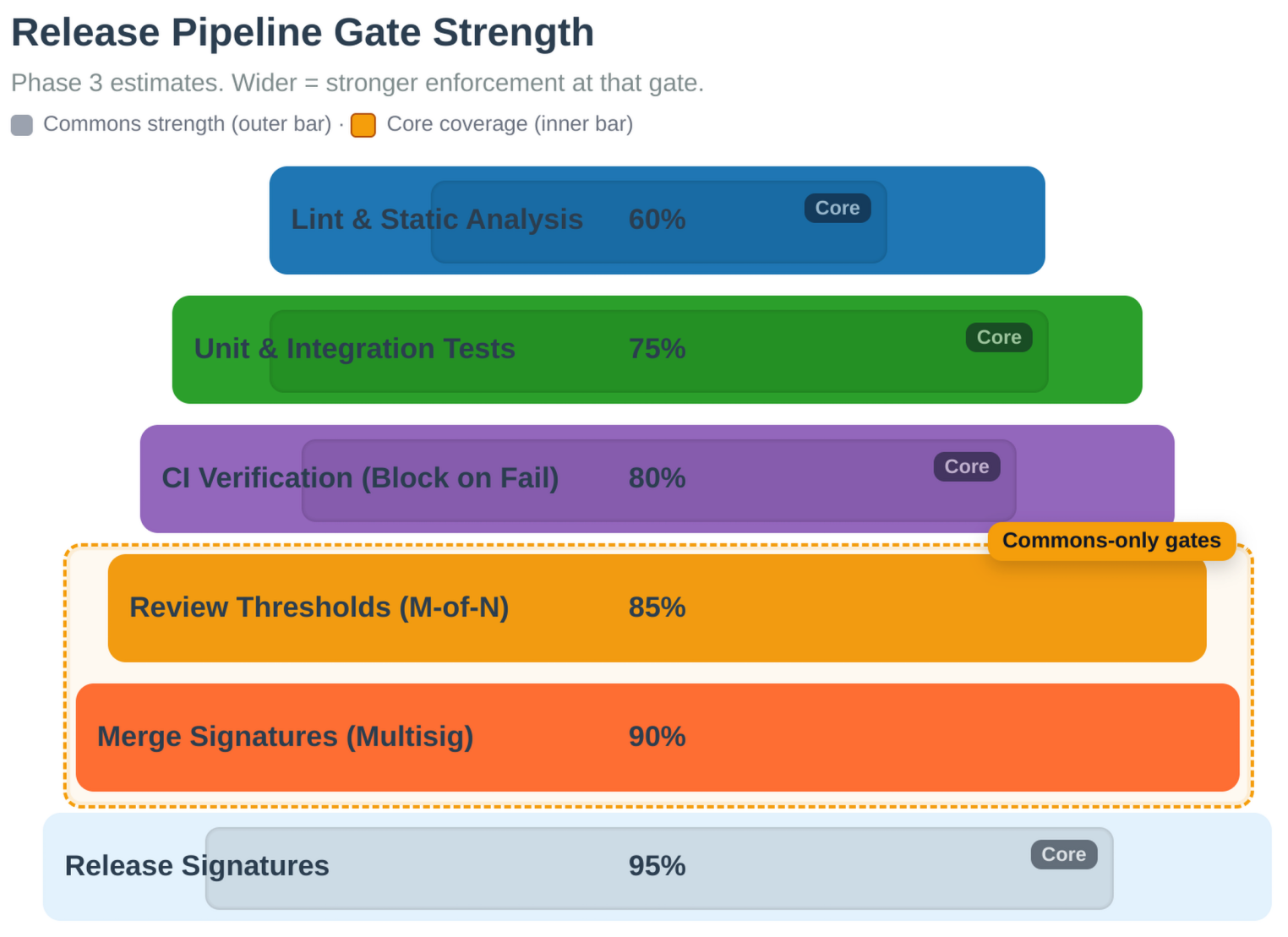 Figure: Gate strength across the release pipeline. Each gate requires specific signatures and review periods based on the change tier.
For detailed maintainer procedures, see maintainer guide.
See Also
- PR Process - How maintainers sign PRs
- Multisig Configuration - Signature threshold requirements
- Layer-Tier Model - Governance tier system
- Governance Model - Governance system
- Governance Overview - Governance system introduction